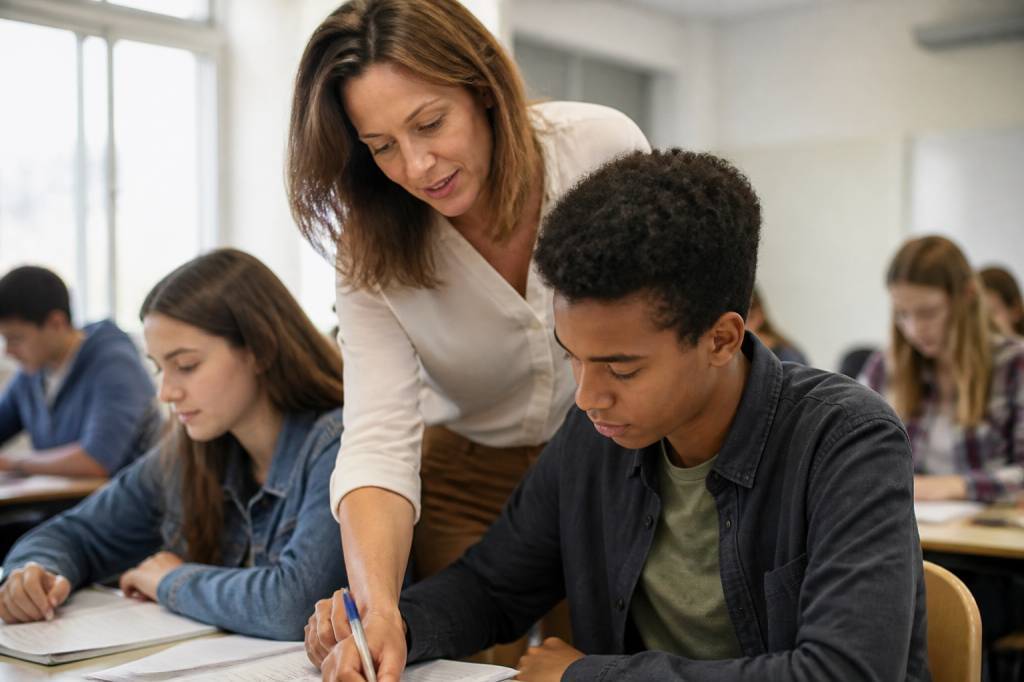
The relationship between teachers and students in French schools is a central part of the country’s education system, shaping not only academic success but also social development, discipline, and a sense of belonging. In France, school is often seen as a place where knowledge, respect, and structure meet. Teachers are expected to transmit subject matter with clarity and rigor, while students are encouraged to develop independence, critical thinking, and intellectual curiosity. This balance creates a classroom culture that feels distinct from many other education systems around the world.
Understanding this relationship helps explain why French schools are often associated with high academic standards, formal classroom expectations, and a strong respect for the teacher’s role. At the same time, the dynamic is not one-sided. French students are taught to ask questions, debate ideas, and express disagreement in a thoughtful way. The result is a complex and evolving relationship built on authority, learning, and mutual expectations.
The teacher’s role in French schools
In French schools, the teacher is traditionally viewed as a figure of authority and expertise. Teachers are not only instructors but also guardians of knowledge who guide students through a structured curriculum. Their role is deeply respected, and this respect is reinforced by the classroom environment, school traditions, and national educational culture.
French teachers are expected to maintain order, deliver lessons clearly, and uphold academic standards. They often have significant control over how a subject is taught, and the classroom tends to be organized around the teacher’s voice. Unlike educational models that emphasize informal interaction, French schools typically preserve a more formal relationship between educator and learner.
This does not mean teachers are distant or unapproachable. Many teachers build strong, supportive connections with their students. However, the foundation of the relationship is usually professional and structured. Students address teachers with formal language, especially in secondary schools, and are taught from an early age to recognize the teacher’s position in the school hierarchy.
How students are expected to behave
Students in French schools are expected to show discipline, attentiveness, and respect. This begins in primary school and continues through secondary education. Classroom etiquette is taken seriously, and students learn that learning requires focus and appropriate behavior. Interrupting, speaking out of turn, or challenging the teacher in an aggressive manner is generally discouraged.
At the same time, French education values intellectual participation. Students are often encouraged to think critically, defend an argument, and take part in discussion. The important difference is that participation must be structured and respectful. In other words, students can challenge an idea, but they are expected to do so with logic and courtesy.
This approach shapes the way students interact with teachers. They are trained to listen carefully, take notes, and respond thoughtfully. These habits can sometimes make the classroom feel strict, but they also help students develop strong academic discipline and a serious attitude toward learning.
Respect and formality in daily interactions
The relationship between teachers and students in French schools is strongly influenced by formality. In many schools, especially at the secondary level, students use formal speech when addressing teachers. This linguistic convention reflects the broader cultural expectation that teachers should be treated with respect and that school should remain a professional environment.
Formality also appears in the way students ask for permission, submit work, and participate in class. Teachers set the tone, and students adapt to that tone. This creates a classroom environment where boundaries are clear. While the atmosphere may be less casual than in some other countries, many students and teachers appreciate the clarity this brings.
For families searching for information about a french school, this formal yet intellectually rich environment is often one of the most defining characteristics. It is part of what gives French education its reputation for seriousness, structure, and high expectations.
The balance between authority and dialogue
Although French schools are known for authority, they also value dialogue. Teachers do not simply lecture while students remain silent. In many classrooms, discussion plays an important role, especially in subjects such as literature, history, philosophy, and social sciences. Students may be asked to explain their reasoning, compare viewpoints, and analyze texts in depth.
This dialogue, however, does not remove the teacher’s authority. Instead, it works within a framework where the teacher directs the lesson and moderates student participation. The classroom becomes a space where ideas are exchanged, but within clear rules. This balance teaches students how to argue effectively without becoming disrespectful.
In practice, this means that a French student may disagree with a teacher’s interpretation, but must do so with evidence and precision. Such a model encourages intellectual maturity and prepares students for academic writing, public speaking, and debate.
The influence of the French academic culture
The relationship between teachers and students cannot be separated from the broader academic culture in France. Education is highly valued, and schools are seen as institutions that help shape responsible citizens. Teachers therefore carry a significant social role, and students are aware that academic effort matters.
The culture places strong emphasis on grades, written expression, and mastery of subject content. Because of this, teachers often act as evaluators as much as mentors. Their feedback can be detailed, rigorous, and sometimes critical, but it is intended to push students toward improvement. Students learn to accept constructive criticism and to see evaluation as part of the learning process.
This academic seriousness can create pressure, but it also encourages resilience. Students who succeed in this system often develop strong organizational skills, analytical thinking, and the ability to work under clear expectations. Teachers, in turn, are responsible for guiding students through this demanding environment while maintaining fairness and consistency.
Teacher-student relationships across different school levels
The nature of the relationship changes as students progress through the school system. In primary school, the teacher often plays a nurturing and highly central role. Young children rely on their teacher for structure, encouragement, and basic academic development. The relationship is warm but still based on authority and routine.
In middle school, discipline becomes more important as students begin to manage more subjects and different teachers. The relationship becomes less personal than in primary school, but it remains significant. Students are expected to adapt quickly to different teaching styles while maintaining the same standards of respect.
In high school, the relationship often becomes more academic and less dependent. Students are expected to take greater responsibility for their own learning, but teacher guidance remains essential. At this stage, classroom discussions may become deeper and more challenging, particularly in subjects that require analysis and argument.
Communication outside the classroom
Communication between teachers and students in French schools usually remains professional even outside lesson time. Teachers may offer extra help, answer questions, and provide support when needed, but interactions generally stay within school boundaries. This can sometimes feel reserved compared with systems where teacher-student relationships are more casual or conversational.
Nevertheless, many teachers are committed to helping students succeed. They may spend time explaining difficult concepts, correcting work, or advising students on academic progress. The relationship is therefore not cold; it is simply organized around educational purpose rather than personal familiarity.
Students often come to appreciate this structure, especially when they recognize that teachers are genuinely invested in their development. Trust grows through consistency, professionalism, and the shared goal of academic achievement.
The role of discipline in building trust
Discipline is often misunderstood as a barrier to good relationships, but in French schools it frequently serves as a foundation for trust. Because expectations are clear, students know what is required of them and teachers know how to maintain order. This predictability can reduce confusion and create a stable environment for learning.
When students understand the rules, they are more likely to feel secure. When teachers apply those rules fairly, students are more likely to respect them. Over time, this creates a relationship in which authority is not arbitrary but accepted as part of a shared educational mission.
Trust grows when teachers are consistent, prepared, and fair. Students notice when a teacher is organized and when feedback is given with clarity. Even strict teachers can be appreciated if they are seen as just and supportive. This is one of the most important aspects of the French classroom dynamic.
Challenges in the modern classroom
Like education systems everywhere, French schools are changing. Digital learning, cultural diversity, and new pedagogical ideas are influencing the way teachers and students interact. Some schools are exploring more collaborative methods, while others continue to emphasize traditional authority and structure.
These changes can create tension. Some students may want more flexibility, more dialogue, or a less formal atmosphere. Some teachers may feel pressure to adapt while preserving academic standards. The challenge is to balance innovation with the traditions that have long defined French education.
Another challenge is the growing diversity of student backgrounds. Teachers must often adapt their communication styles to support students with different experiences, learning needs, and linguistic profiles. This requires empathy and skill, without abandoning the clarity that French schools value.
Why the relationship matters for student success
The relationship between teachers and students has a direct impact on learning outcomes. When students feel respected, guided, and challenged, they are more likely to engage with their education. In French schools, this relationship is structured to promote seriousness, independence, and intellectual discipline.
Teachers help students learn how to think, not just what to memorize. Students learn how to present arguments, write clearly, and take responsibility for their progress. The teacher-student relationship therefore supports both academic performance and personal growth.
It also prepares students for future environments in which professionalism, communication, and critical thinking matter. Whether they continue into higher education or enter the workforce, students benefit from having learned how to interact with authority in a respectful and productive way.
Key characteristics of the relationship in French schools
Several features define the relationship between teachers and students in French schools:
- Respect for the teacher’s authority and expertise
- Clear classroom rules and expectations
- Formal language and structured communication
- Strong emphasis on academic rigor
- Encouragement of critical thinking within respectful boundaries
- Teacher feedback focused on improvement and precision
- A balance between discipline and intellectual exchange
These elements work together to create a system where learning is serious, organized, and intellectually demanding. While the tone may be more formal than in other countries, many students benefit from the clarity and stability this approach provides.
Long-term effects on students
The influence of the teacher-student relationship in French schools often extends far beyond the classroom. Students may carry with them the habits they developed at school: punctuality, attention to detail, respect for structure, and comfort with debate. These qualities can be valuable in university studies, professional life, and civic participation.
Students also learn how to manage expectations and respond to evaluation. Because feedback is often direct, they become used to revising their work, improving their arguments, and striving for better performance. This can build both confidence and perseverance.
For many students, especially those who succeed in demanding subjects, teachers become important intellectual figures. They may not be close friends or informal mentors, but they often leave a lasting impression through their rigor, fairness, and dedication.
The relationship between teachers and students in French schools is therefore more than a simple classroom dynamic. It reflects a cultural approach to education that values respect, structure, and intellectual seriousness. While it may differ from education systems that prioritize informality and emotional closeness, it remains a powerful model for academic growth and personal development.