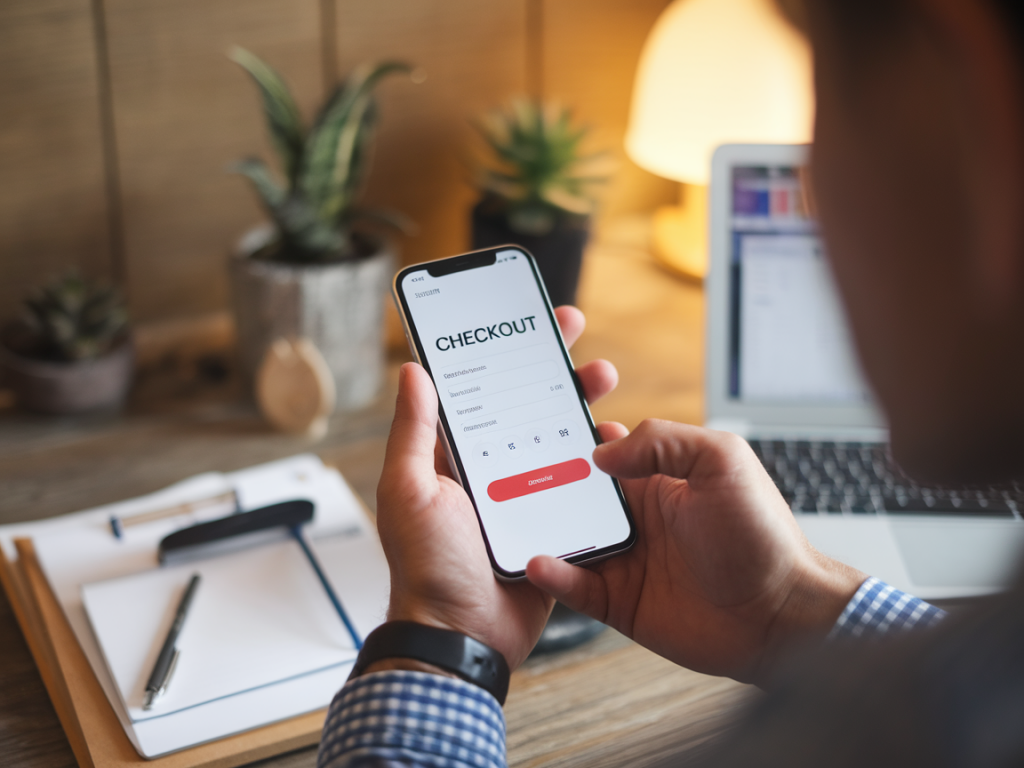
I once audited a subscription checkout flow for a mid-sized SaaS that was losing roughly 25% of customers at first renewal—not because they were unhappy, but because payments silently failed. That invisible leak was costing them six figures a year. I rebuilt the checkout and retention logic with two simple, complementary approaches: retry logic that treats temporary payment failures as fixable, and a customer risk scoring system that prioritizes recovery efforts. The result: fewer false churns, higher recovery rates, and a clearer understanding of who truly churns versus who was lost to technical friction.
Why involuntary churn matters (and why it’s different)
When I say “involuntary churn,” I mean customers who didn’t intend to leave—cards expired, issuing banks declined, or AVS mismatches triggered failures. Unlike voluntary churn, these customers still value your product and are often ripe for quick recovery. Yet many teams treat failed payments as final: if a charge fails, they mark the customer as churned and move on.
That’s a mistake. In my experience, simple changes in the checkout and retry logic can recover a large chunk of those customers. The two key elements I use are:
- Smart retry logic with escalating retries based on error type and card issuer behavior.
- Customer risk scoring that flags which accounts to prioritize for manual outreach, email sequences, or account holds.
Map the failure modes before you change anything
The first thing I do is map the types of failures occurring in the payment system. Stripe, Adyen, Braintree and other processors return standardized error codes, but the business meaning varies. Example failure modes I typically see:
- Card expired
- Insufficient funds
- Lost/stolen card or card blocked by issuer
- Temporary issuer decline (network error)
- AVS/CVC mismatch
- Suspected fraud blocks
Collect these for the last 6–12 months and calculate recovery rates per code. You’ll usually find that some codes (temporary declines) recover at a very high rate with automated retries, while others (stolen card) require customer interaction.
Design retry logic that reflects reality
Retry logic should be intentional, not arbitrary. Here’s the pattern I implement:
- Immediate retry for transient network or processor errors: If the gateway returns a transient error, retry once after a few minutes.
- Escalating backoff for issuer declines: For issuer declines, schedule a series of retries over 5–7 days with increasing intervals. For example: 0 hours, 6 hours, 24 hours, 72 hours, 5 days.
- Differentiate by error code: Don’t retry indefinitely for an “expired_card” error; instead, trigger an email and update the billing info flow.
- Limit total attempts: Cap retries to avoid spamming banks and to prevent billing noise—6–8 attempts is a practical ceiling in most cases.
Why this works: banks sometimes decline for temporary reasons (daily limits, processor issues). A well-timed retry catches customers once the issue is resolved. In a recent rebuild of a checkout for an e-learning platform, adding a 5-attempt schedule recovered ~40% of what would have been lost customers on that error category.
Use customer risk scoring to prioritize actions
Retry logic handles the mechanical side; risk scoring directs human and higher-touch automated interventions where they’ll do the most good. A simple score can be built from a few signals:
- Tenure and LTV: longer-tenured and higher LTV customers get higher priority.
- Product usage in last 30 days: active users are likelier to resolve payment issues.
- Failure code severity: expired_card vs. card_declined vs. fraud_block.
- Payment method: ACH vs. credit card have different recovery expectations.
- Email deliverability & last engagement: if emails bounce, prioritize SMS or support outreach.
Score example:
| Signal | Weight |
|---|---|
| Tenure & LTV | +30 |
| Active in last 30 days | +25 |
| Failure: expired_card | +10 |
| Failure: fraud_block | -20 |
| Email bounce | -10 |
Accounts above a threshold (e.g., 40) get manual or SMS outreach and account holds that preserve their access while billing is resolved. Lower scores follow automated email sequences and scheduled retries only.
Rework the checkout UI & flows
Prevention is better than recovery. During checkout and in the account area, add frictionless friction: small features that reduce future failures without irritating customers.
- Card updater integrations: Use card updater services from Stripe or Adyen to refresh expired card numbers automatically.
- Save alternative payment methods: Encourage adding a backup card or PayPal/Apple Pay token at signup.
- Clear billing metadata: Show next billing date, last 4 digits, and a one-click update card flow.
- Pre-billing notifications: Send an email 7 and 2 days before renewal with one-click confirmation of card details.
Small UX changes—like a bold “update card” CTA in the app and an inline validation for AVS/CVC—lower the probability of failures later on.
Communications that actually work
Where most teams fail is the messaging. I build sequences that are specific to the failure type and the customer risk score:
- For temporary declines: Friendly SMS or push after the first retry: “We tried your card—no worries. We’ll try again in 6 hours.”
- For expired_card: An email with a one-click update link and the exact steps to refresh payment—“Your last payment didn’t go through because your card expired. Update in 30s.”
- For high-value accounts: Direct human outreach from customer success within 24 hours.
- For fraud blocks: Secure flow to verify identity, or instructions to contact the issuing bank.
Make emails transactional and actionable: include the payment attempt time, amount, and a clear CTA. Use tokens from your payment gateway to let customers update payment info without re-entering everything.
Observe & iterate with data
After rolling out retry and scoring, track these KPIs:
- Recovery rate by failure code
- Time to recovery (median hours/days)
- Net churn reduction vs baseline
- Revenue recovered per month
- Number of customer touches per recovery
Run A/B tests: try different retry schedules or different messaging on a subset of accounts. In one experiment, switching the retry window from 24/48/72 to 6/24/72 hours improved recovery for temporary declines by 12% without increasing failed payment volume.
Operational implementation checklist
Here’s a practical checklist I hand to engineering and ops teams when we implement this:
- Map all gateway error codes and label them by action category
- Create a retry scheduler that supports variable backoff per code
- Integrate card updater / token refresh services
- Build a simple risk score pipe in your data warehouse (or use your CRM)
- Design communication templates per failure type and channel
- Set up alerts for spikes in failures by code
- Run a 30–60 day pilot on a subset of accounts
Most of these tasks are small engineering efforts but yield outsized business impact. When I implemented this for a B2B subscription business, the product team and I recovered nearly half of the previously lost revenue in six weeks. That turned an invisible leak into predictable retention gains.
Finally, treat involuntary churn as a product problem as much as a payments one. The technical fixes matter, but so do design, messaging, and operations. With retry logic and risk scoring aligned, you’ll stop treating failed payments as a mystery and start recovering predictable revenue every month.